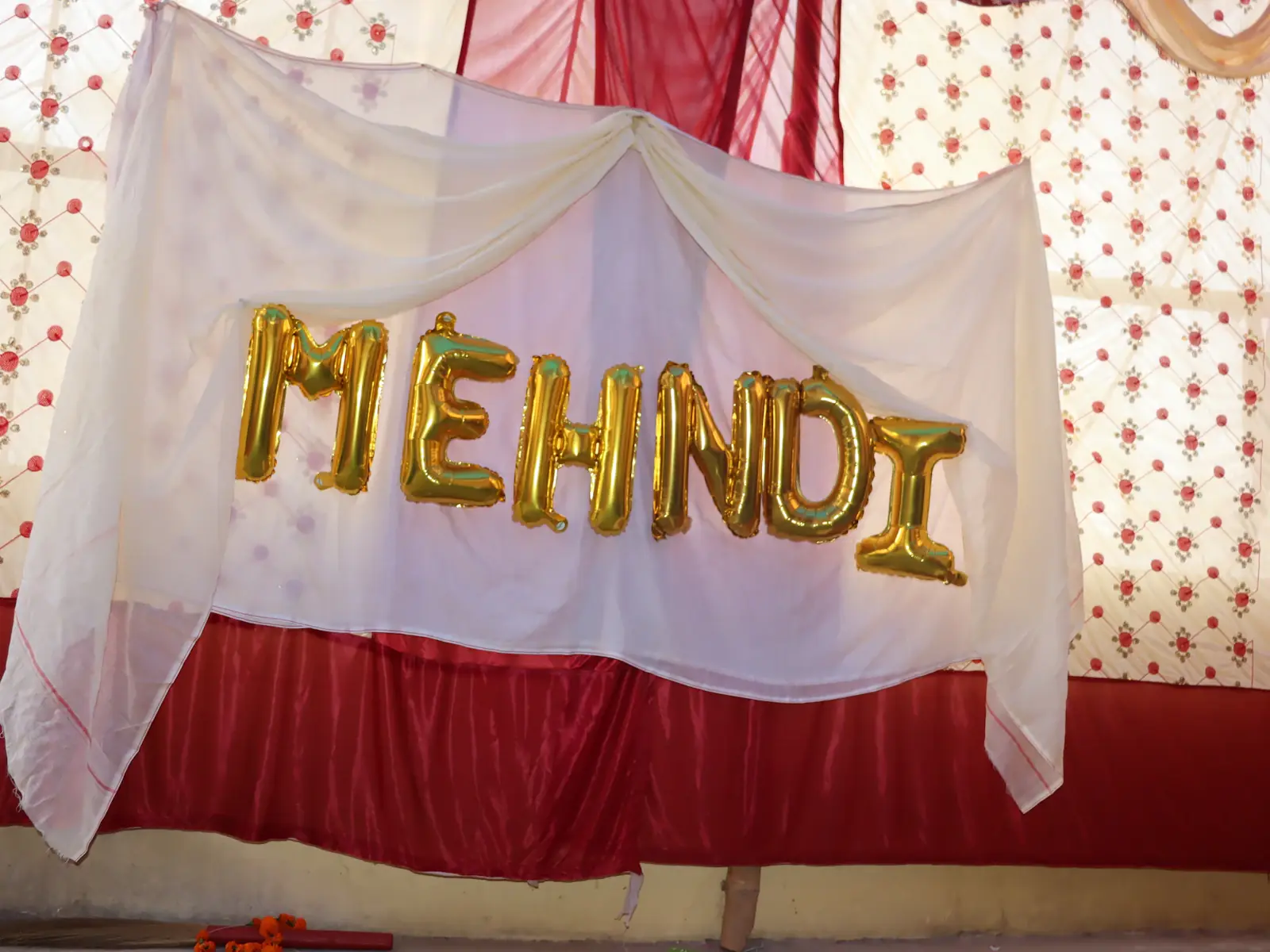
A mehndi is one of the more realistic wedding functions to decorate yourself, particularly for a smaller, home-based or family-hosted event, since the styling is generally more forgiving and less formally structured than a walima. This guide covers decor ideas organised by budget and effort level, along with the practical logistics that tend to trip people up when doing it independently.
Low-Effort, High-Impact Ideas
Marigold and fresh flower garlands are one of the most cost-effective ways to bring traditional mehndi colour into a space, whether draped along a stage backdrop, wrapped around pillars, or used as table runners. They’re widely available and don’t require specialist floral design skills to use effectively. Fairy lights and simple string lighting, layered behind a backdrop or draped overhead, add atmosphere at relatively low cost and work well in both indoor and outdoor home settings. Floor seating with colourful cushions and floor cloths is a traditional mehndi styling choice that doubles as practical seating for a home-based event, and requires less setup than a formal seated arrangement.
Mid-Effort DIY Backdrop Ideas
A simple fabric backdrop, using dupattas, sarees, or dedicated decor fabric in your chosen colour palette, draped and pinned behind the main seating or stage area, is one of the most popular DIY mehndi decor choices, since it photographs well without requiring construction skills. Adding paper or fabric flower garlands to the backdrop increases visual impact without significantly increasing the effort involved. A simple frame (even a basic wooden or PVC pipe structure) covered in fabric and flowers can create a more structured backdrop than draping fabric directly on a wall, and is reusable for other functions.
Colour Palette Planning
Yellow and green remain traditional mehndi colours, but many families now build palettes around other combinations, pink and orange, or more muted tones. Whatever palette you choose, deciding it early matters more for a DIY setup than a professionally decorated one, since you’re likely sourcing flowers, fabric, and lighting from multiple places yourself, and consistency across those sources takes more advance planning than a single decorator managing procurement centrally.
Table and Seating Styling
Simple table runners in your colour palette, small floral centrepieces (marigolds work well and are inexpensive), and coordinated cushion covers for floor seating are all low-cost ways to tie the space together without a large decor budget. Disposable or reusable colourful dinnerware in coordinating tones can extend the theme to the catering area without additional decor spend.
What Tends to Go Wrong With DIY Mehndi Decor
Underestimating setup time is the most common issue, DIY decor almost always takes longer to install than expected, particularly backdrop assembly and floral arrangement, so build in more setup time than feels necessary, ideally the day before or several hours before guests arrive rather than same-morning. Sourcing flowers and fabric from multiple vendors without confirming availability in advance is another common problem, particularly for less common colour combinations, confirm availability a week or more ahead rather than assuming your local market will have exactly what you need on short notice. Lighting placement is often an afterthought, but it significantly affects how photos and video turn out, test your lighting setup before the day itself if possible, since a backdrop that looks fine in daylight can photograph very differently once the sun sets and artificial lighting takes over.
Budget-Friendly Material Sourcing Tips
Local flower markets are almost always cheaper than florists or decor shops for marigolds and basic garlands, particularly if you’re buying the morning of or the day before your event when flowers are freshest and pricing is most competitive. Fabric for backdrops doesn’t need to be new, repurposed dupattas, sarees, or even curtain fabric in the right colour palette work just as well as material bought specifically for decor. Reusable elements (a backdrop frame, string lights, cushion covers) are worth a slightly higher upfront cost if you’re likely to host other functions or smaller gatherings in future, since the per-use cost drops significantly with reuse.
A Practical DIY Mehndi Timeline
Two weeks out: finalise your colour palette and source fabric or backdrop materials. One week out: confirm flower availability with your local market or supplier, and finalise your seating layout plan. Two to three days out: begin any advance-preparable elements (garland-making, backdrop frame assembly if applicable). Day before or morning of: install backdrop, arrange floral elements, set up lighting, and do a lighting test before guests arrive if the event runs into the evening.
When DIY Decor Makes Sense, and When It Doesn’t
DIY mehndi decor works well for smaller, more informal gatherings where the relaxed aesthetic suits a homemade look, and for families who have the time and interest to handle the sourcing and setup themselves. It becomes considerably harder to manage well for larger guest lists, more elaborate staged mehndis with performance elements, or when the same people handling decor also need to manage the rest of the event’s logistics on the day. If you find yourself wanting mehndi decor to look more polished and structured than a DIY approach realistically allows, that’s a reasonable point to consider professional decor help for just this one function, without needing full event planning for the rest of the wedding.
Final thoughts on diy mehndi decor
Diy mehndi decor is easier when you start with three decisions: your guest count, your city and how much of the coordination you want to own yourself. If you would like a second pair of eyes, Ziva Events Management can review your plan and send an itemised proposal for diy mehndi decor, built around your real numbers.
Frequently asked questions about diy mehndi decor
How much does a DIY mehndi decor setup typically cost compared to hiring a decorator?
This varies widely depending on scale and material choices, but DIY setups are generally lower cost primarily because you’re not paying for professional labour and design time, the trade-off is your own time and effort in sourcing and assembly, which shouldn’t be underestimated.
Can I combine DIY decor with some professionally sourced elements, like a rented backdrop frame?
Yes, this is a common middle ground, renting or buying a structural element (a backdrop frame, lighting equipment) while handling the styling and assembly yourself can reduce effort without the full cost of a complete professional decor package.
What’s the biggest visual mistake people make with DIY mehndi decor?
Inconsistent colour matching across sourced materials, since flowers, fabric, and lighting are often bought from different vendors without a clear reference sample to match against. Bringing a physical swatch or reference photo when sourcing each element helps avoid this.
How far in advance should I start planning DIY mehndi decor?
Roughly two weeks out for colour palette and material sourcing, with final assembly happening in the days immediately before the event. Starting earlier gives more room to source less common materials or colour combinations.
Is it realistic to DIY decor for an outdoor mehndi, or is that better left to professionals?
Outdoor DIY decor is achievable but adds weather-dependency and setup complexity (securing lightweight decor elements against wind, planning for potential rain) that indoor or home-based DIY setups don’t need to consider, so build in more contingency time and materials if you’re going this route outdoors.
See our full Event Decor & Styling page if you’d rather have this handled professionally, or How to Plan a Mehndi Function for the broader logistics beyond decor.
Further reading: Event management overview. Planning your own event? Try our free event cost calculator or read the event planner cost guide.
Need help with diy mehndi decor?
Tell us your event type, city and guest count and we will send you an itemised proposal.